
The Ghiblification of the Internet
and the rough road to ChatGPT Image Generation Update

Last week, OpenAI released their latest ChatGPT image generation update for their paid users, allowing for the creation of detailed and photorealistic images — really impressive!
What is different in this update?
Increased detail and realism — textures, lighting, text that is actually readable and says something
Better interpretation of context — improved management of complex prompts, better representations of abstract concepts and unusual combinations
Larger range of styles — ability to generate images in a large range of artistic styles, as for instance photorealistic, cartoonish, abstract, or even imitating the style of specific studios or artists (like Studio Ghibli, duh)
Customization — the user can provide feedback and make specific adjustments to the generated image
Apparently, these improved capabilities open a whole new world of possibilities and applications for the end user, allowing to produce impressive results with just a short prompt. For instance, you can easily use it for:
Producing consistent characters for storytelling, presentations, or whatever
Creating images with text that is accurate and readable
Uploading and editing your own images
All these are truly remarkable, but the big unanswered question that remains in regard to the entire Generative AI discussion is how can a model be able to produce content that follows a specific artistic style if not being fed content that follows this specific style. How can ChatGPT produce Disney-like, Marvel-like, Ghibli-like, or whatever-like images if by not consuming their entire set of artworks first? Spoiler alert: it cannot.
Up to this point, several organisations have filed copyright infringement lawsuits against OpenAI and Microsoft, but nowhere near the vast number of organisations whose data most probably have been used in their models. For example, the New York Times is taking OpenAI to court, and Universal Music has a copyright case with Anthropic. Most definitely, training AI models on copyrighted works isn’t fair use, and all this copyright infringement discussion is something we should expect to inevitably emerge in the AI sector in the future. In OpenAI ‘s defense, the “Ghibli-style” option has existed for Stable Diffusion since at least November 2022.
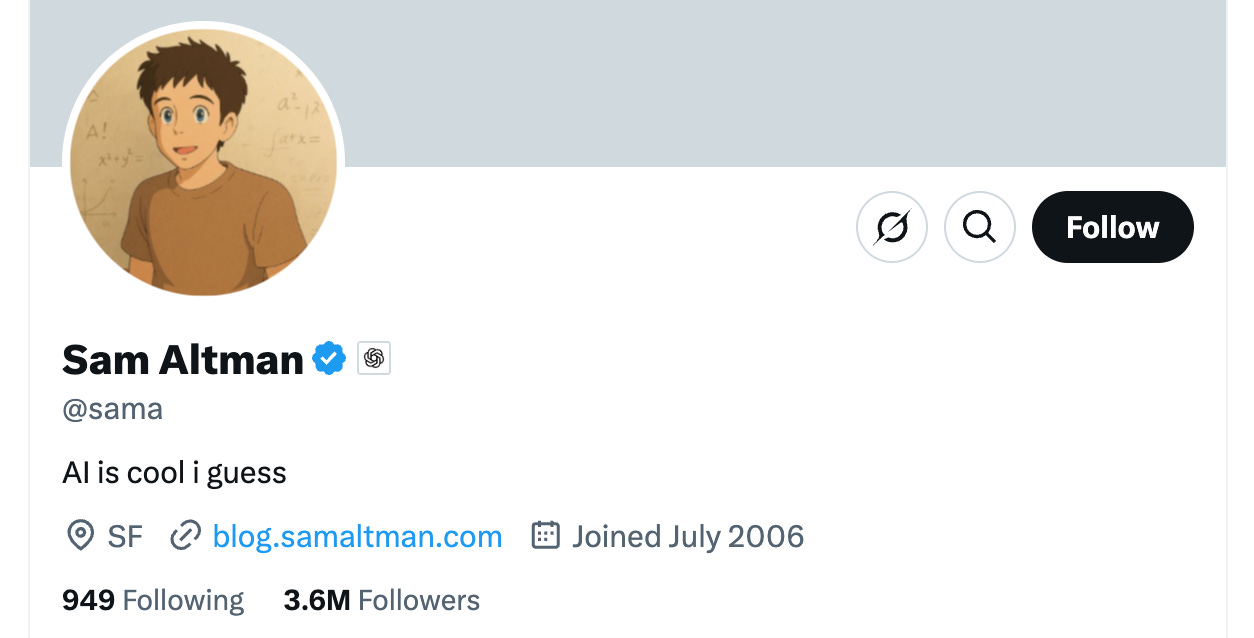
Anyways! This week, the update also became available to all free users, flooding the internet with Ghibli-like images of questionable aesthetic, right into the way Sam Altman showed. For instance, Ghibli-style images of 9/11 or immigrants being arrested and deported aren’t really my cup of tea when it comes to artistic expression. Tone deaf would be an understatement…
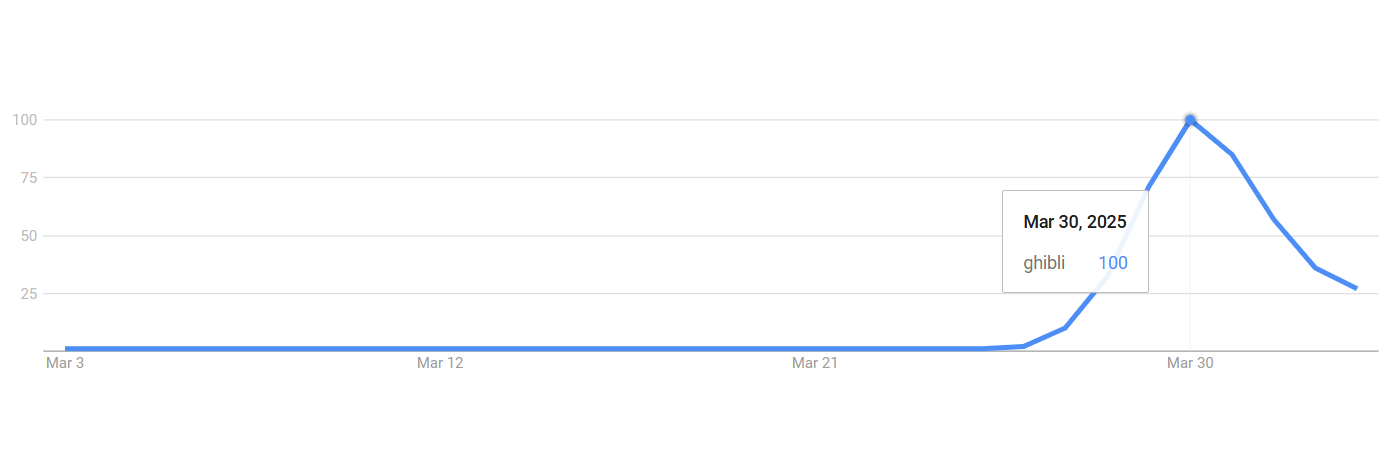
But…
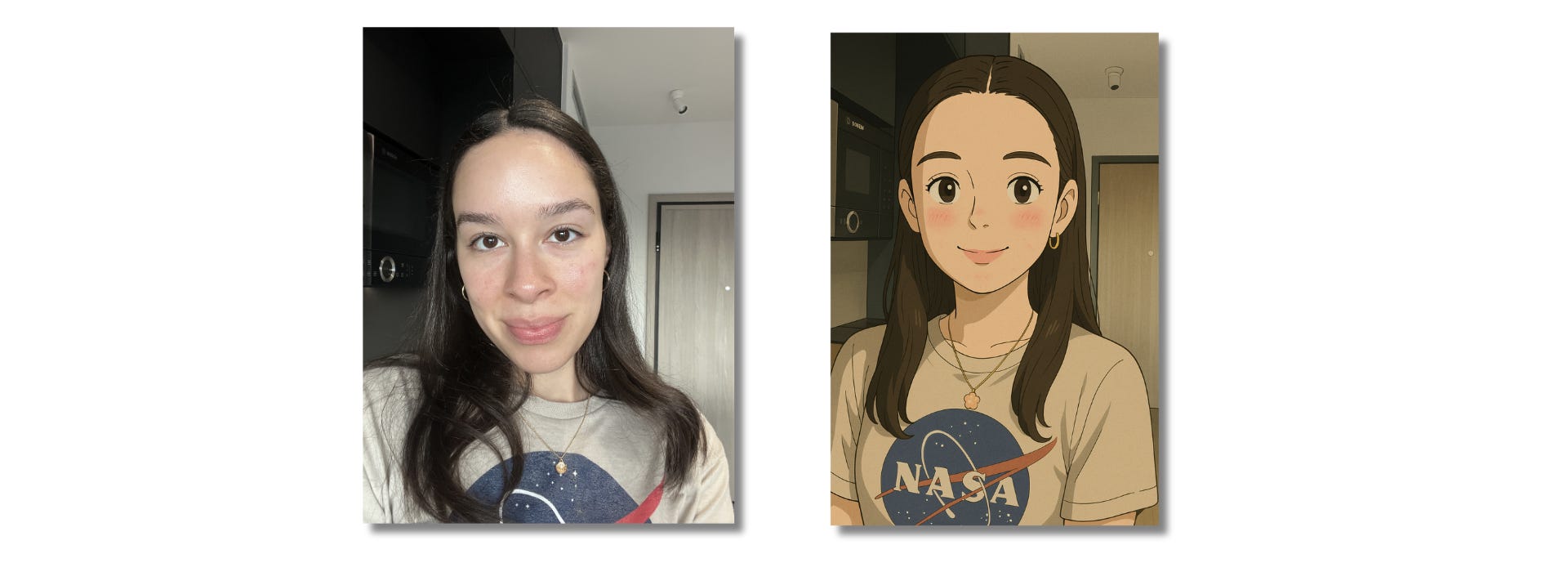
I am human too, and it would be pretentious to assume a moral superiority over myself and not give it a go…
I also did a bunch of other variations — a photorealistic recreation, joining Dune’s Bene Gesserit, playing a Tennis match at Rio 2016 Olympics…
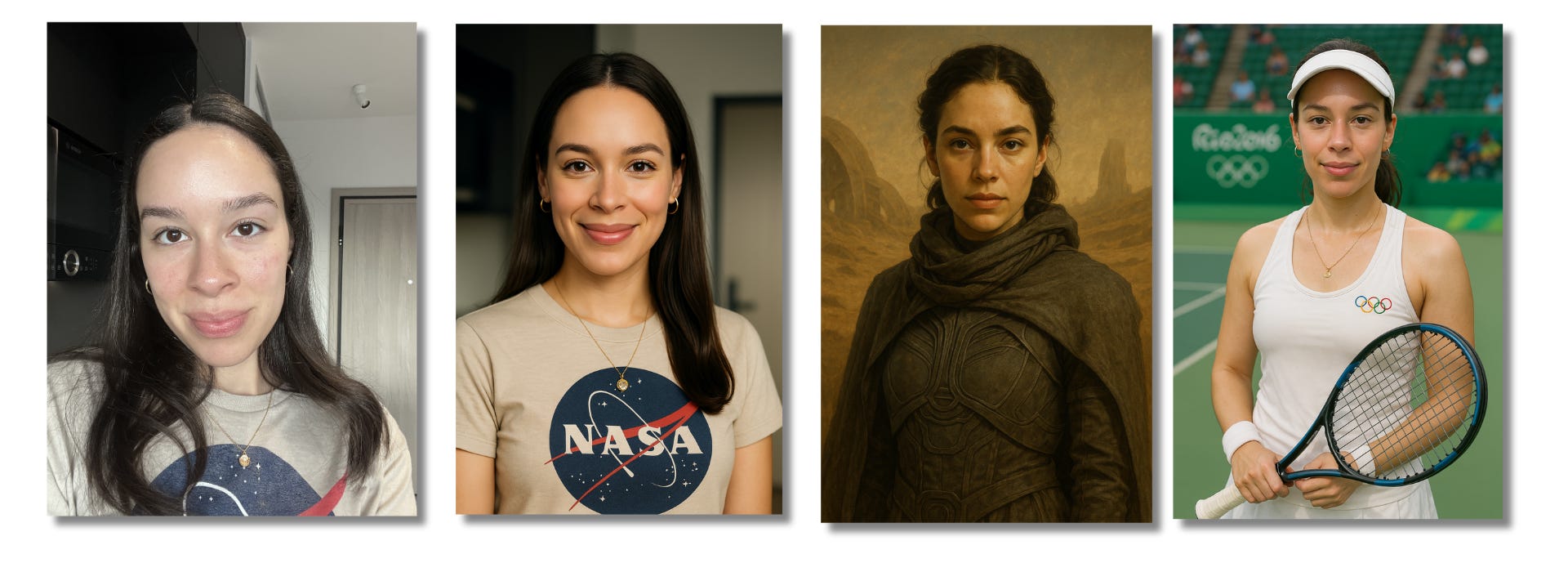
Was it fun? Sure, it was kind of fun. Do I look like the images? Happily, not so much yet. But, from a tech perspective, it is hands-down amazing! The exact recreation of all the details of the initial image is striking, and it even got the text right — check NASA or Rio 2016. Nevertheless, it is really interesting to consider that, given this tool allowing us to create literally any illustration, everyone chose to create Ghibli-style images that don’t even resemble us and are lowkey somewhat of an offense to the original Studio Ghibli artwork. Human beings never fail to amaze us…
But what about Studio Ghibli?
If you’ve been living under a rock, Studio Ghibli is a Japanese animation studio that has created several award-winning animation films, forever placing them in the hearts of audiences. Some of their best and most popular films include My Neighbor Totoro, Princess Mononoke, and Spirited Away. All of their films contain whimsical, magical characters that embark on some kind of irregular journey. The animations are made by hand, frame by frame, and the plot, the coloring, the characters, the music, all of it is just of immaculate quality and taste down to the tiniest detail.
In 2016, Hayao Miyazaki — Studio Ghibli’s co-founder, chairman, and ultimately creative soul — gave an interview in the context of a documentary about his life massively dissing AI. Among other things, Miyazaki said that:
“I am utterly disgusted.”
“I would never wish to incorporate this technology into my work at all. I strongly feel this is an insult to life itself.”
“I feel like we are nearing the end of times. We humans are losing faith in ourselves.”
pheww 😮💨
Apparently, the tabloids took this 2016 clip and ran with it, presenting it as if Miyazaki or Studio Ghibli had issued this statement as a response to the ChatGPT-produced images. Nonetheless, this could not be further from the truth since Studio Ghibli has remained silent— at least for now.
On a more sober look, Studio Ghibli’s essence is, unfortunately, the complete opposite of anything related to mass production and AI. The animations are made by hand, frame by frame, which implies a tremendous amount of work. Famously, the 4-second market scene from The Wind Rises took 15 whole months to complete. Arguably, the time and effort dedicated to creating those animations by hand is exactly what makes them so mesmerizing, and not just another animation we watched and then forgot about.

To me, the ultimate question of all this — the entire GenAI discussion — is, if creation is no longer linked to some kind of skill or talent but solely linked to capital and resources, what happens then? If any worthwhile skill, that takes years of practice and effort to develop, can be then imitated and reproduced, essentially be stolen from the ones that are skilled, where does this leave us? It is certainly not democratizing art — you cannot and should not democratize being a Michelin-winning chef or an Olympic gymnast because it takes a lifetime of effort. Not everyone should be awarded a gold Olympic medal because what on earth would be the point of this? Inevitably, when something is accessible to everyone and can be made in an easy and fast way, it loses its value.
On my mind
Ultimately, the problem lies with each and every one of us not being able to be at our discernment, and, low-key, having poor taste 🤷. Producing tons of AI-generated images of things in Ghibli style or any other specific artist/studio style is surely kind of fun. But most probably, it is not art. And that is because art shouldn’t be driven by effectiveness; it should be driven by expression. Painting a picture or writing a poem isn’t and shouldn’t be treated as a chore we have to get done like washing the dishes, printing an email, or doing the laundry. The process of painting a picture or writing a poem is essentially the point of it — not the result. Don’t get me wrong! GenAI is undeniably the technological breakthrough of our era — there is no question about it. It has impressive capabilities and can deliver jaw-dropping productivity and results. Nonetheless, when it comes to art, just because it is very good at reproducing and imitating certain art styles, it doesn’t mean that it isn’t still plagiarism.
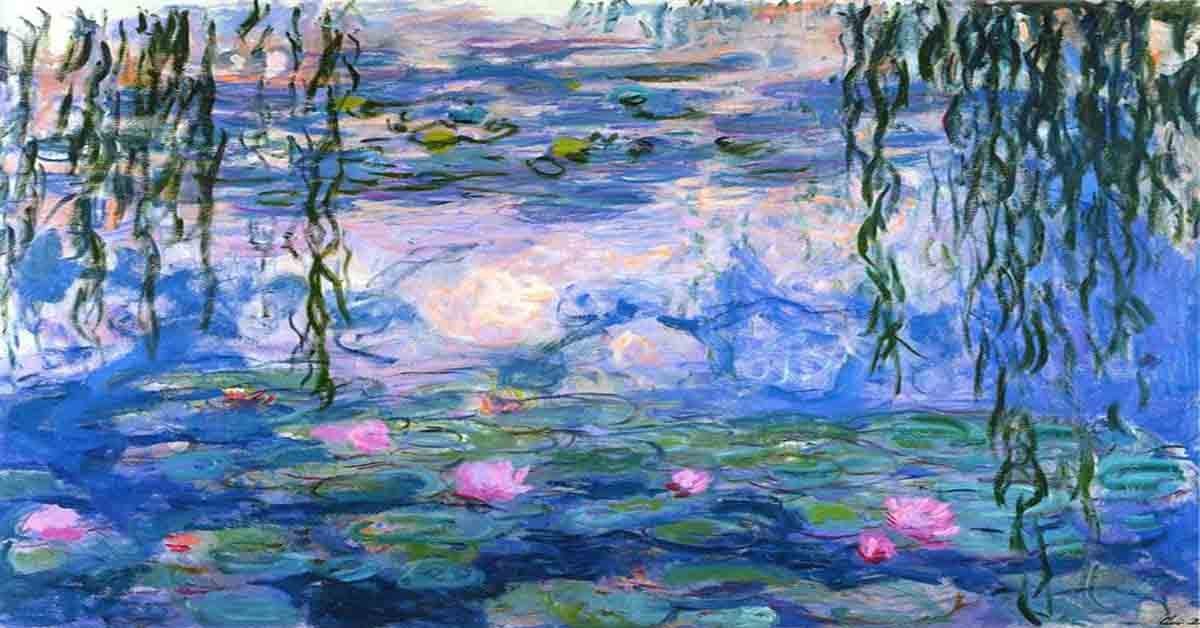
On the flip side, maybe our way of thinking is just outdated. Maybe AI is just a new medium of art. Notably, impressionism arose to a great extent as a response to photography. One of the main pursuits of renaissance art was to create photorealistic illustrations of the world, but when photography was invented, it was the endgame of photorealistic illustration. The impressionism art movement appeared as a result of the popularisation of photography — since photography now depicted a photorealistic world, impressionist art did not. Most importantly, it took quite some time for photography to even be imagined as an artistic activity, let alone for society and culture to collectively accept it as one. Similarly to AI-generated images, someone using a camera can produce an extremely large range of photos of higher or lower aesthetic, taste, and artistry. It would be unjust to condemn the products of a photographic camera as artless, and maybe it is equally unjust to do so for the products of an AI model. In the end, AI image generation is most probably just another medium with which we aren’t familiar just yet.
Loved this post? Got an interesting data or AI project? Let’s be friends!
Join me on 💌 Medium 💼 LinkedIn ☕ Buy me a coffee!